Who Is Dr. Joe Dispenza — And Can He Really Help You Heal Your Body and Transform Your Life?
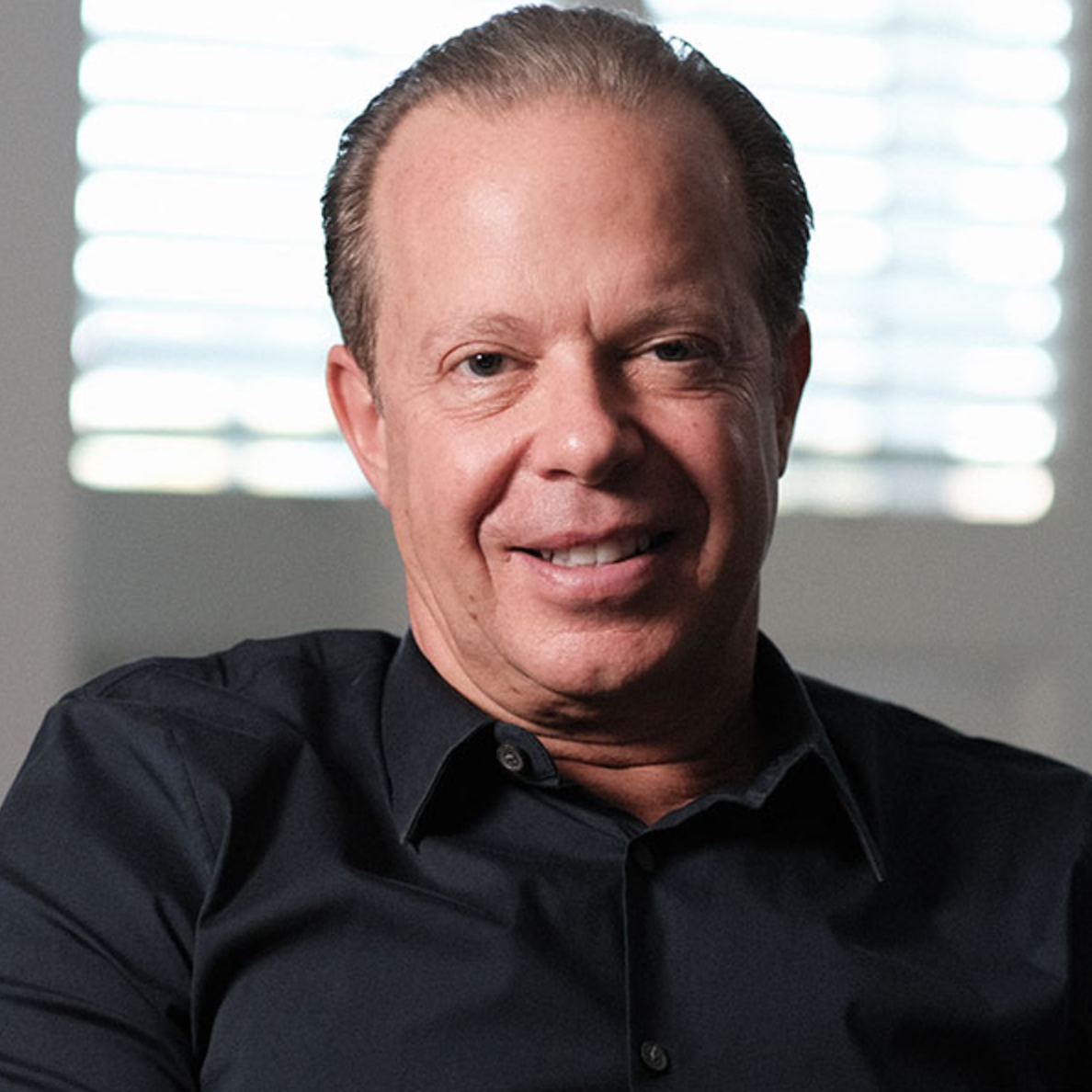
"The moment you decide to no longer think the same thoughts, perform the same actions, and live by the same emotions — your biology changes." — Dr. Joe Dispenza
The Man Behind the Movement
If you've spent any time in the worlds of self-development, neuroscience, or holistic healing, you've almost certainly crossed paths with one name: Dr. Joe Dispenza. He is a New York Times bestselling author, an international lecturer, a researcher, and — perhaps most intriguingly — a man who once healed himself from a devastating spinal injury using nothing but his mind.
Born in 1962, Dispenza holds a Bachelor of Science degree from Evergreen State College and a Doctor of Chiropractic degree from Life University in Atlanta, Georgia. Over decades of work, he has woven together the latest findings in neuroscience, epigenetics, quantum physics, and meditation into a single, practice-driven philosophy: that human beings possess a far greater capacity for self-healing and self-transformation than conventional medicine or society leads us to believe.
He is not a medical doctor in the traditional sense. He doesn't prescribe medications. He doesn't operate in a hospital. What he does instead is arguably more radical — he teaches people how to use their own consciousness as a tool for change.
The Accident That Changed Everything
The origin story of Joe Dispenza is nothing short of extraordinary — and understanding it is essential to understanding why his work carries such emotional and intellectual weight.
In 1986, while competing in a triathlon in Palm Springs, California, Dispenza was struck by a vehicle. The impact fractured six of his thoracic vertebrae. Four of them were compressed fractures of the vertebral body. Several surgeons told him that if he wanted to walk again, he would need immediate surgery — a Harrington rod implant that would fuse his spine together.
He declined.
Instead, Dispenza did something unprecedented: he used his mind. For two hours each morning, he reconstructed his spine in his imagination — visualizing every disc, every nerve, every vertebra returning to perfect health. If his thoughts drifted to doubt or fear, he started over. He was relentless. In just under ten weeks, he was walking again. By twelve weeks, he was training.
That experience became the seed for everything that followed. It forced him to ask a question that would consume the next three decades of his life:
"What is the relationship between the mind and the body — and how far can it go?"
The Core of His Philosophy
Dispenza's teachings rest on a handful of foundational ideas, each backed — to varying degrees — by emerging scientific research.
1. You Are Not Hardwired
For most of the twentieth century, science assumed the brain was relatively fixed after childhood. Dispenza, drawing on the explosion of neuroplasticity research, argues the opposite: the brain is constantly rewiring itself in response to thought, experience, and emotion. Every time you think a thought or feel an emotion, neurons fire together — and neurons that fire together, wire together.
The implication is enormous: if your personality — your moods, your habits, your chronic illnesses — is a product of your neural patterns, then changing those patterns changes you. Not metaphorically. Literally.
2. Thinking Creates Biology
Dispenza pushes neuroplasticity further into the domain of epigenetics — the science of how environment and experience influence gene expression. He cites research showing that prolonged stress, trauma, and negative emotional states can switch genes on and off in ways that predispose the body to disease. But the reverse is also true: coherent, elevated emotional states — joy, gratitude, love — can signal the body into healing.
In his work, he refers extensively to the research of scientists like Dr. Bruce Lipton (The Biology of Belief) and Dr. Candace Pert (molecules of emotion), building a case that the mind doesn't just influence the body — it is the body's primary operating system.
3. The Present Moment is Where Change Lives
One of the most practical threads in Dispenza's work is his obsession with the gap between stimulus and response — between what happens to you and what you do about it. Most people, he argues, live reactively: an event triggers an emotion, which triggers a habitual thought, which triggers a familiar behavior. Round and round, the same loop, year after year.
His meditations are designed to interrupt that loop. By teaching people to enter deep states of present-moment awareness, he aims to create a neurological space where old patterns can dissolve and new ones can take root.
4. The Body as Subconscious Mind
Dispenza argues that 95% of who we are by middle age is a memorized set of behaviors, emotional reactions, unconscious habits, and conditioned beliefs — a kind of biological autopilot that runs beneath conscious awareness. Most healing traditions focus on changing conscious thought. Dispenza goes deeper: he targets the body itself, which he calls "the subconscious mind," teaching people to shift the biochemical and neurological environment from the inside out.
The Workshops: Where Theory Meets Practice
Reading Dispenza's books is one thing. His live workshops — held around the world, sometimes running for five days — are another level entirely.
At these events, hundreds of people gather to meditate for hours at a time, often in complete silence. Attendees are guided through open-focus meditations, blessing of the energy centers (a form of chakra-based body scan), and walking meditations designed to anchor new states of being into the body.
What makes these workshops famous — and controversial — are the documented healings that appear to take place. Dispenza and his team of researchers collect biological measurements before and after: brain scans, gene expression tests, immune markers, telomere length. A significant number of participants report the resolution of chronic illnesses, autoimmune conditions, depression, and chronic pain.
His team has published data — though critics note that many findings are based on self-report and lack randomized controlled trials — suggesting measurable changes in IgA levels (an immune marker), gene expression, and heart rate variability.
His Most Influential Books
If you want to engage with Dispenza's ideas without attending a workshop, his books are the clearest entry point:
The Controversies Worth Knowing
Any honest treatment of Dispenza's work has to acknowledge the criticisms.
The science is real — the conclusions are sometimes stretched. The neuroscience and epigenetics he draws on are legitimate fields. But critics argue that Dispenza frequently extrapolates far beyond what the research actually demonstrates, particularly in his use of quantum physics. The behavior of subatomic particles does not map cleanly onto human consciousness.
Testimonials aren't clinical evidence. The healing stories at his workshops are genuinely moving — and some have been captured on video and verified by medical records. But moving stories are not the same as peer-reviewed clinical trials. The sample is self-selected, the methodology is imperfect, and confirmation bias is a real risk.
The workshop cost. A five-day advanced retreat with Dispenza can run into the thousands of dollars — which places his most intensive work out of reach for many people. This has led to valid criticism about accessibility.
Spiritual bypassing risk. Some mental health professionals caution that Dispenza's framework — which often frames illness as a product of thought and emotion — can inadvertently induce shame in people who are ill and "failing" to heal themselves.
None of these concerns invalidate his work. They're important lenses for engaging with it critically and responsibly.
So — Should You Explore His Work?
Here's an honest answer: it depends on where you are and what you're looking for.
If you are someone who has hit a ceiling with conventional approaches to anxiety, chronic stress, autoimmune issues, or a deep sense of being "stuck," Dispenza's framework offers something genuinely valuable: a rigorous, practice-based method for changing the inner environment — thought patterns, emotional states, neurological habits — that conventional medicine rarely addresses.
His meditations are free on YouTube. His books are widely available. You don't need to spend thousands of dollars to begin.
But if you are dealing with a serious medical condition, please do not abandon conventional treatment in favor of meditation alone. Dispenza himself does not advise this. The most powerful version of his work sits alongside evidence-based medicine, not in opposition to it.
At its best, Dispenza's philosophy is an invitation: to take your inner life seriously as a biological reality, to recognize that how you think and feel is not merely psychological but physiological, and to approach your own healing with curiosity, discipline, and genuine awe at what the human body and mind are capable of.
Getting Started: Practical First Steps
If you're curious about his work, here's a simple starting path:
- Read Breaking the Habit of Being Yourself — it's the clearest and most structured entry point.
- Listen to his interviews on platforms like Impact Theory, London Real, or The Model Health Show for free introductions to his thinking.
- Practice his open-monitoring meditation on YouTube — even 20 minutes daily for two weeks will give you experiential data that no book can provide.
- Track changes in your mood, sleep, and energy. Keep a journal. Be a scientist of your own experience.
- Stay critical — bring intellectual honesty to the process. The most powerful outcome isn't blind belief but a well-tested, personally validated relationship with your own consciousness.
Final Thought
Whatever you make of the quantum field language, the pineal gland activations, or the more esoteric edges of his teaching, one thing about Joe Dispenza feels undeniable: the man is serious about human potential. He has dedicated his life — quite literally from the moment he chose not to have spinal surgery — to proving that we are not fixed, not doomed to repeat our past, and not at the mercy of biology alone.
That idea, rigorously practiced, is worth taking seriously.
Have you tried Joe Dispenza's meditations or attended one of his workshops? Share your experience in the comments below.
Tags: Mind-Body · Neuroscience · Self-Development · Meditation · Healing · Joe Dispenza · Epigenetics · Mindset
Share this article